

What Is Hashed Data?
Hashed data refers to information that has undergone a one-way transformation using a hash function. This process takes something like an email address and turns it into a unique set of characters.How Hashing Works
- Consistency — The function always produces the same output for the same input. Each email address generates a distinct hash.
- Irreversibility — It is impossible to reverse a hash back to the original email address.
How Hashed Data Is Used on the Platform
When you view the Customer section, you may find a hashed record for an email address. We store hashed records in two cases:- When a client launches with us, we import their existing customer list.
- When someone places an order with one of our clients.
What a Hashed Record Looks Like
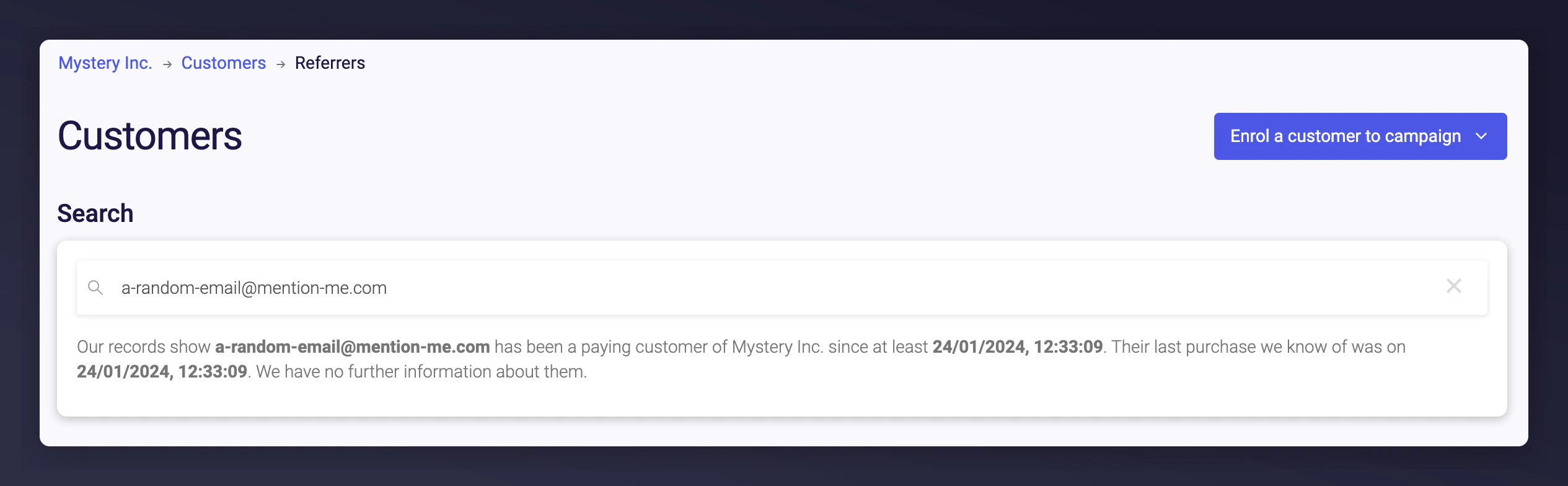
Hashed customer record in the platform
Hashing vs Encryption
- Hashing — A one-way process that turns data into a unique string. Irreversible. No keys involved.
- Encryption — A two-way process using a key to transform data. Reversible with the correct key.