

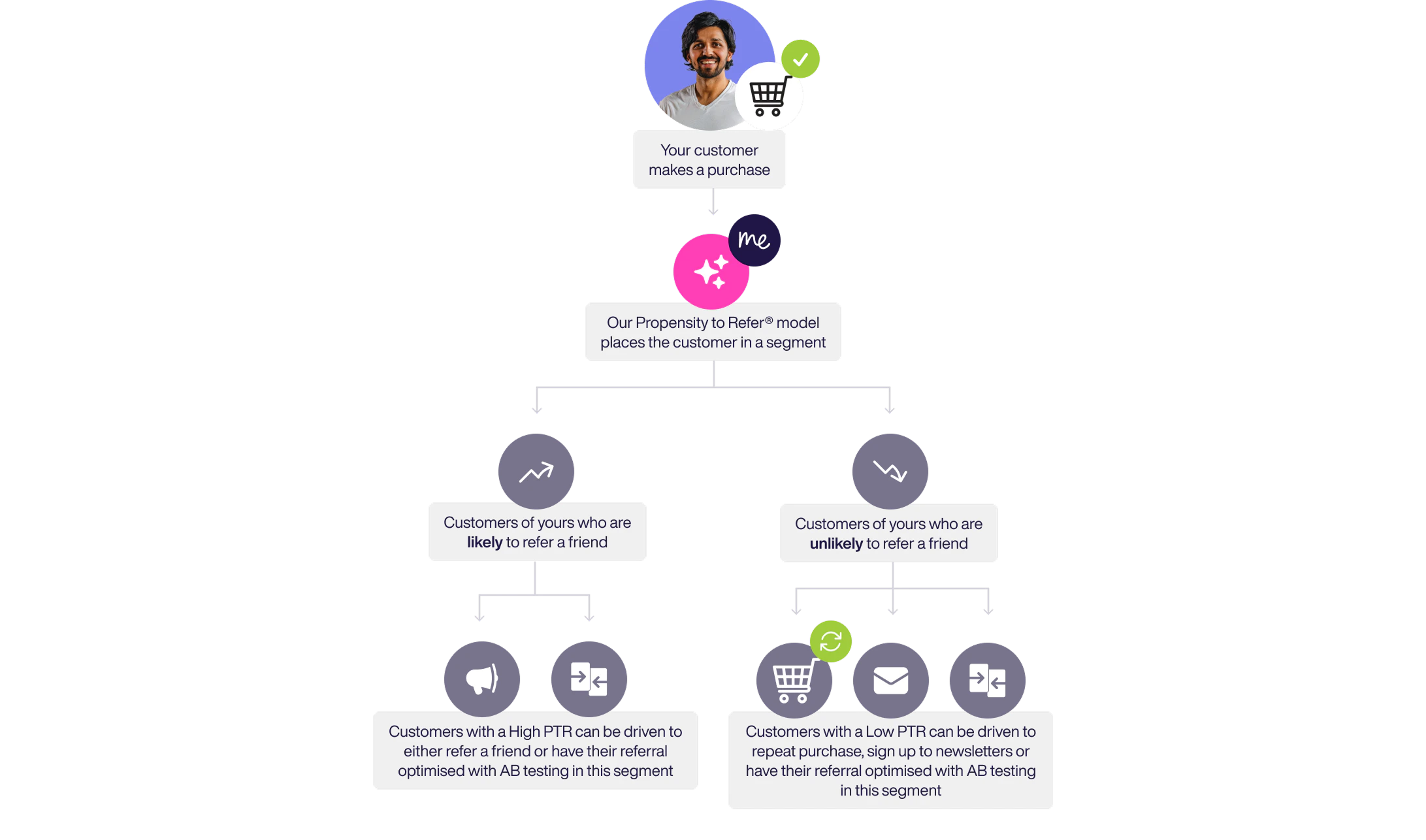
Propensity to Refer model segmentation flowchart
How Does It Work?
Each customer is segmented into one of two groups: those with a High Propensity to Refer and those with a Low Propensity to Refer. The model updates weekly to use the most relevant and up-to-date information. It adapts dynamically to changing customer behaviour. These groups are shown different experiences optimised for conversion: High Propensity to Refer customers are shown referral offers, while Low Propensity to Refer customers are shown alternative actions based on business goals.Example Drivers Used to Predict Customer Behaviour
Alternative Actions Are Based on 3 Business Goals
- Show a discount on the next order to increase repeat revenue
- Show a newsletter sign-up to grow the marketing database
- Present incentives tailored to each segment to optimise referrals and increase revenue
Key Terminology
- High Propensity to Refer (High PTR): Customers most likely to refer. Usually shown a referral offer.
- Low Propensity to Refer (Low PTR): Customers least likely to refer. Usually shown an alternative option (e.g. IFA, NPS).
- Control: Customers who qualify as Low PTR but are shown a referral offer. Used for experimental comparison:
- Measures effectiveness of alternate actions and revenue trade-offs.
- Improves future predictive model accuracy by observing reaction to referral offer.
How Do We Calculate the Additional Value?
We compare the performance of the Low PTR group receiving an alternative action with the Control group receiving a referral offer.How Are Your Customers Being Segmented?
The following example shows an aggregated view of the proportion of customers by propensity group. Proportions may vary at the experiment level.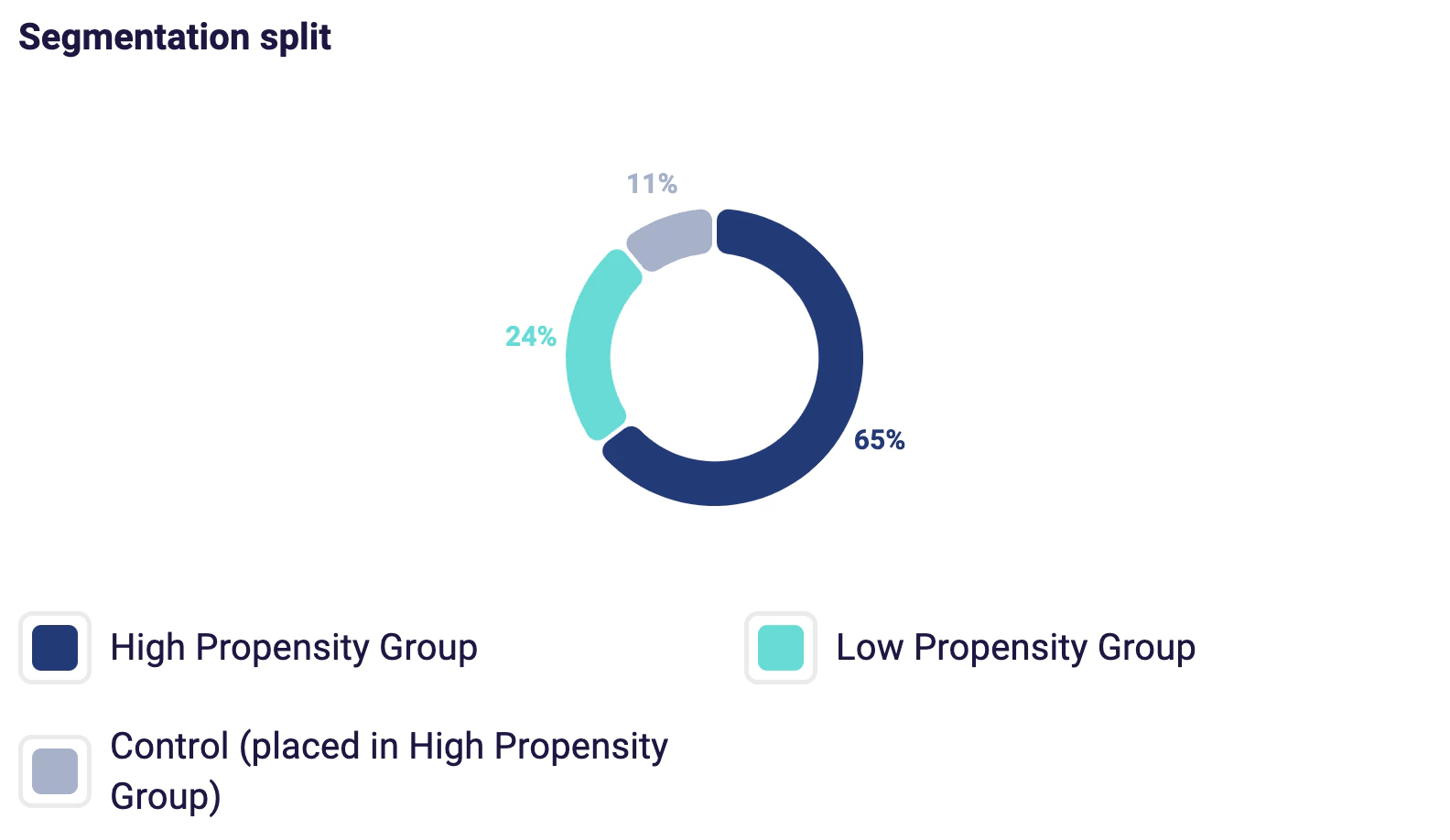
Customer segmentation by propensity group