

What is Extended Customer Revenue?
Extended Customer Revenue (ECR) is the revenue a customer spends (their Individual Customer Revenue, or ICR) plus the revenue generated by their referred friends.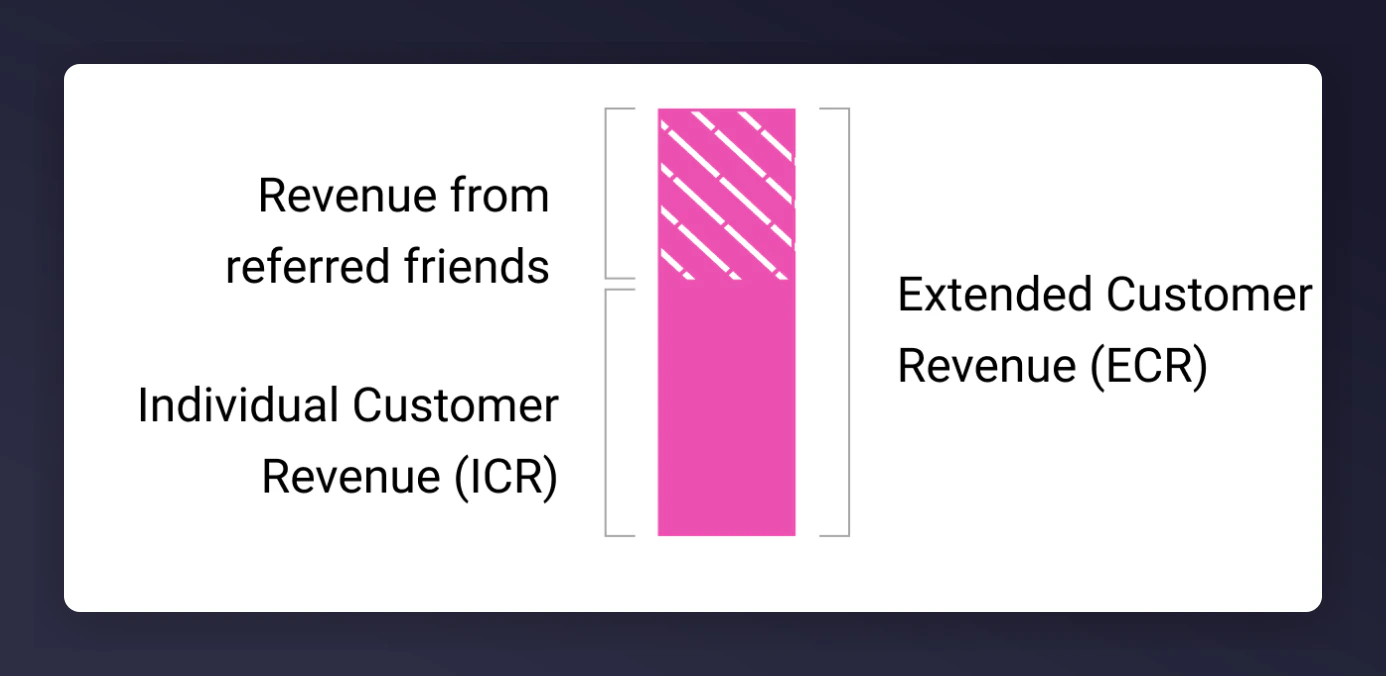
ECR = Individual Customer Revenue + revenue from referred friends
Why is ECR Important?
Brands that only focus on their highest spenders could be missing out on their most valuable customers: their brand advocates. ECR allows you to track the additional revenue brought by customers who refer their friends, revealing previously unrecognised value.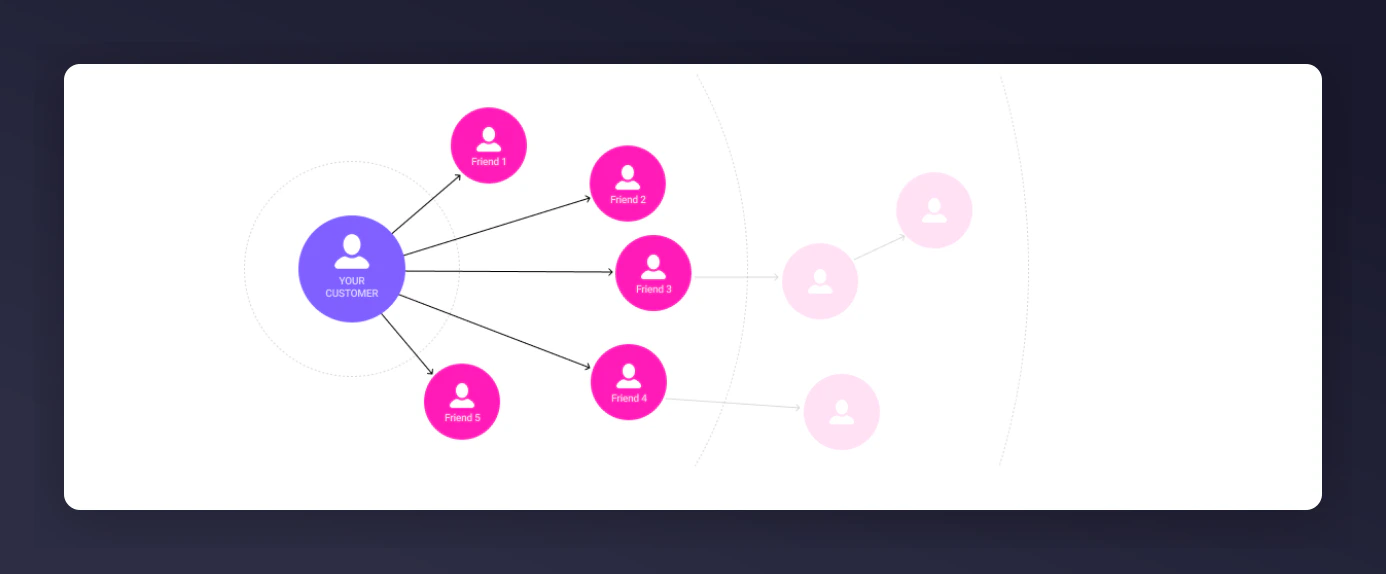
Advocates generate more total value than high spenders alone
ECR Performance
To view ECR performance, navigate to the Customer Revenue page in the Performance section of the Mention Me platform.The Acquisition Filter
The acquisition filter determines the time period for calculating individual spend and referred friend spend, starting from the acquisition date of the original customer. You can select 30, 90, or 180 day periods. The longer the time period, the more time there is for the original customer to make additional purchases and refer more friends, and for those friends to purchase.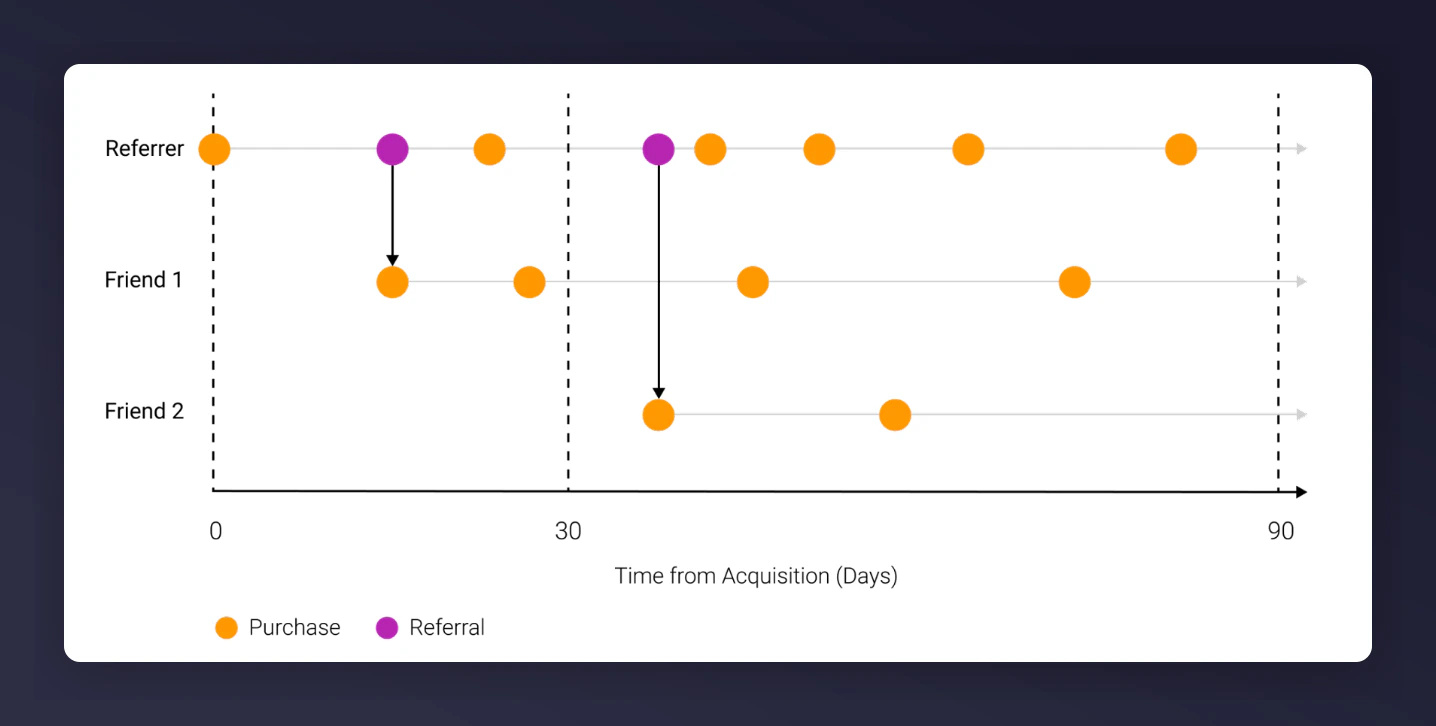
The acquisition filter with 30, 90, and 180 day period options.
Reading the Chart
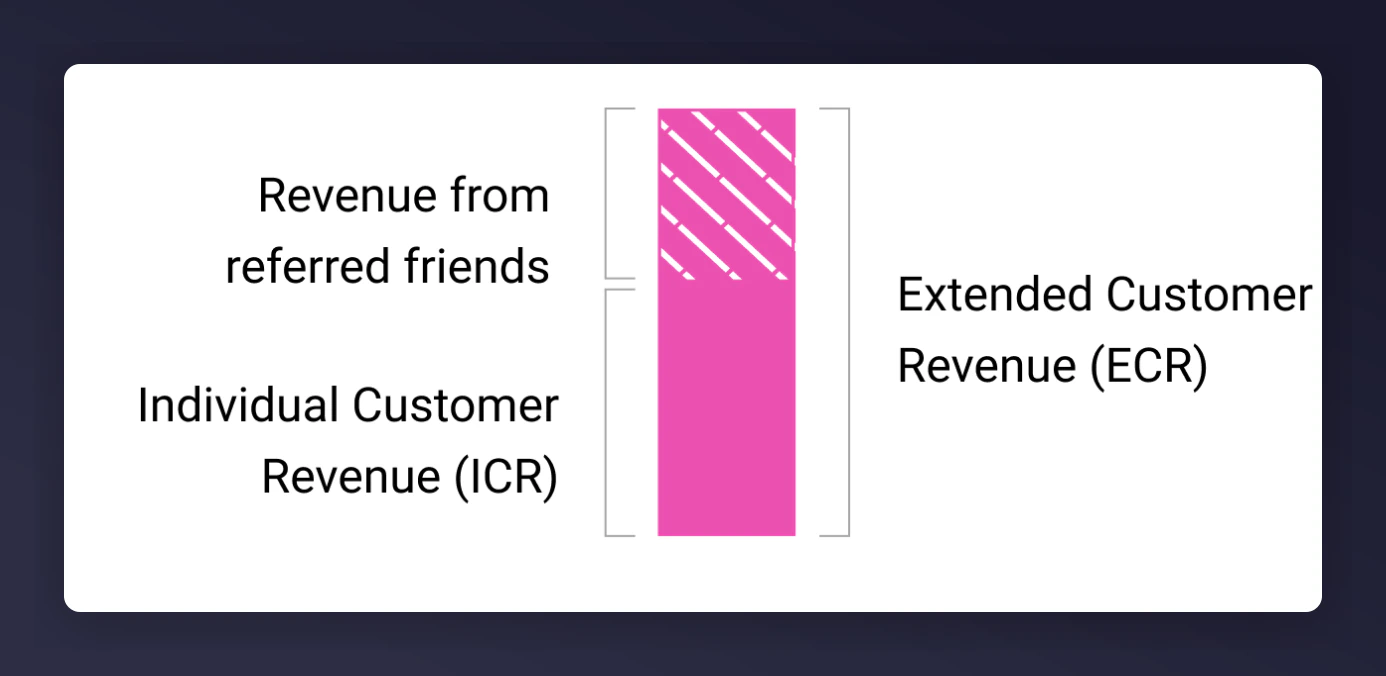
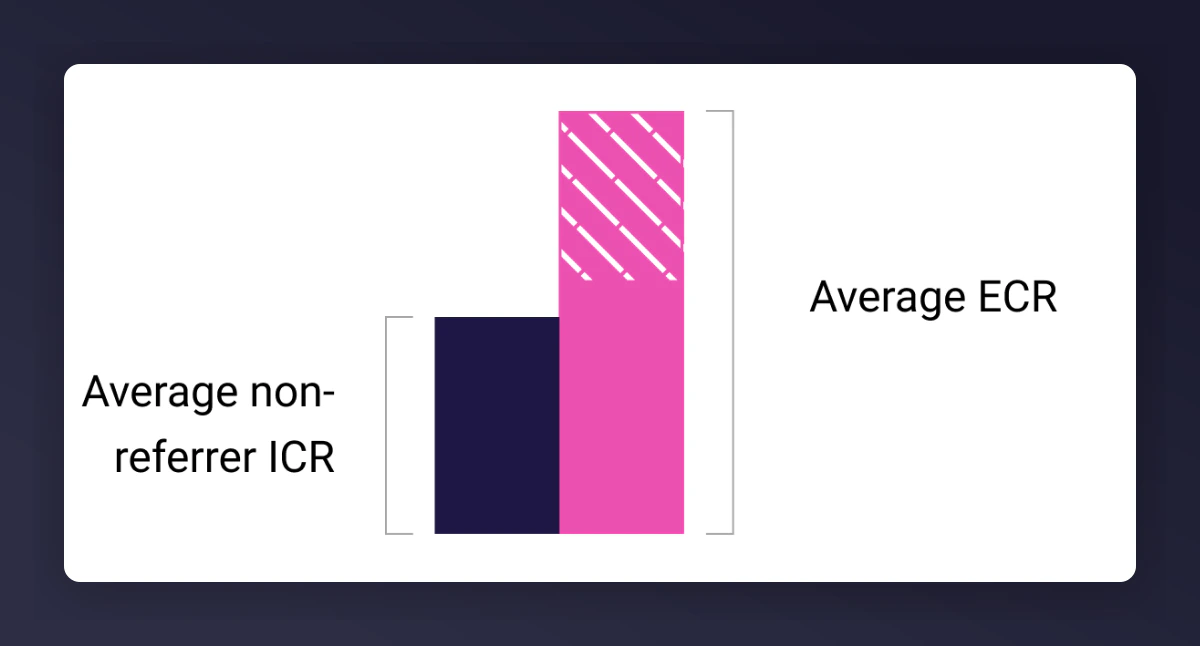
The ECR chart, with pink bars for referrer spend, shaded bars for referred friend revenue, and navy bars for non-referrers.
- Solid pink bar: The amount customers spend within the selected time period from their first purchase (Individual Customer Revenue / ICR).
- Shaded pink bar: Revenue from referred friends within the selected time period.
- Navy bar: Individual revenue of non-referrers.
ECR values grouped by acquisition month, showing changes over time.
High, Medium, and Low ECR Segments
Customers and referrers are segmented into three buckets based on their ECR:High ECR Customers
Threshold calculated using the revenue brought by your top 5% non-referring customers.Medium ECR Customers
Lower threshold based on your top 25% non-referring customers; upper threshold based on the top 5%.Low ECR Customers
Threshold calculated using the revenue brought by your top 25% non-referring customers.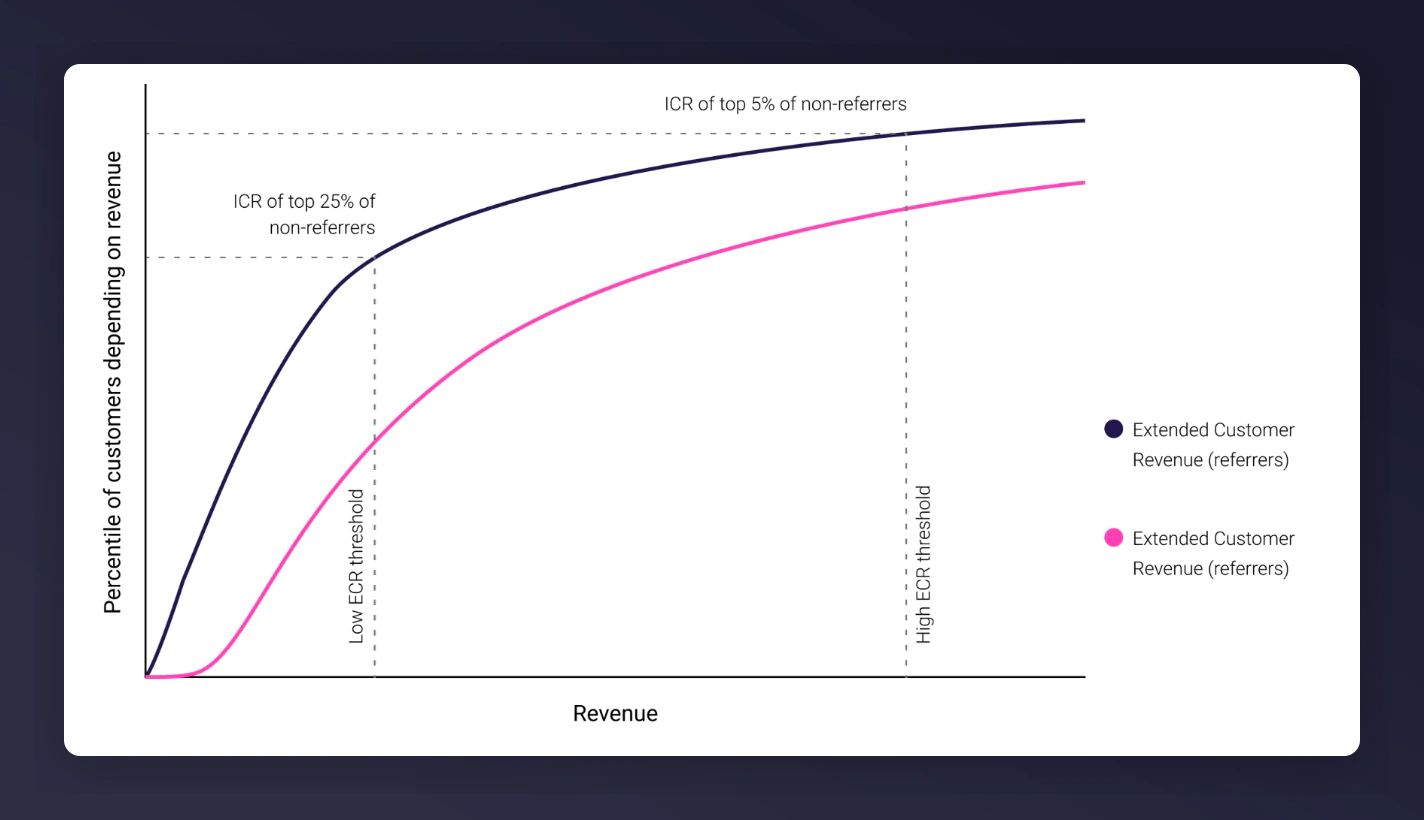
The High, Medium, and Low ECR segment breakdown with threshold definitions.
Finding Your ECR Values
The tooltip on the tile shows your ECR value.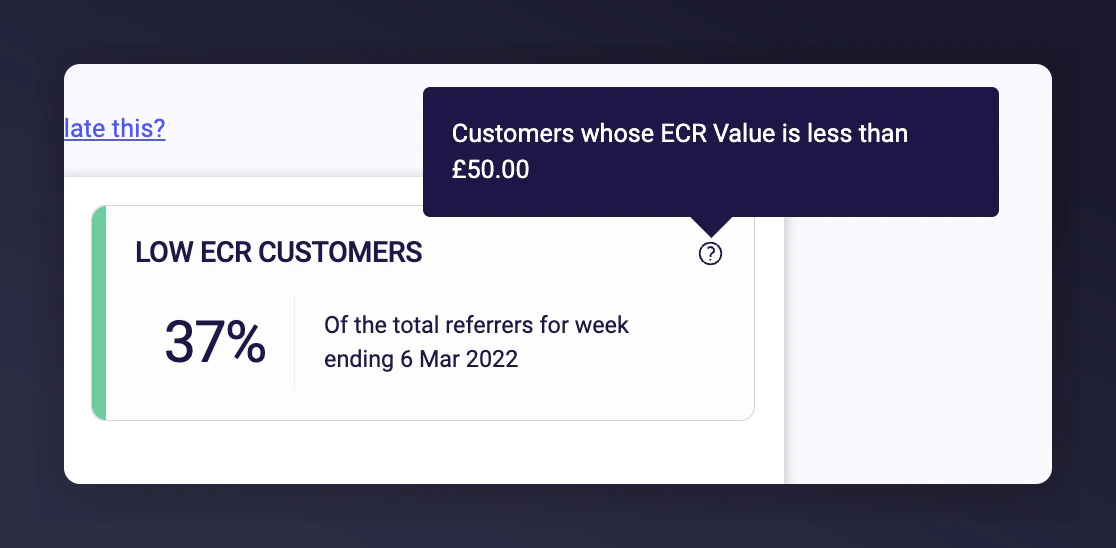
The tooltip showing the ECR value on the segment tile.
Downloading Customer Segments
Open the download dropdown
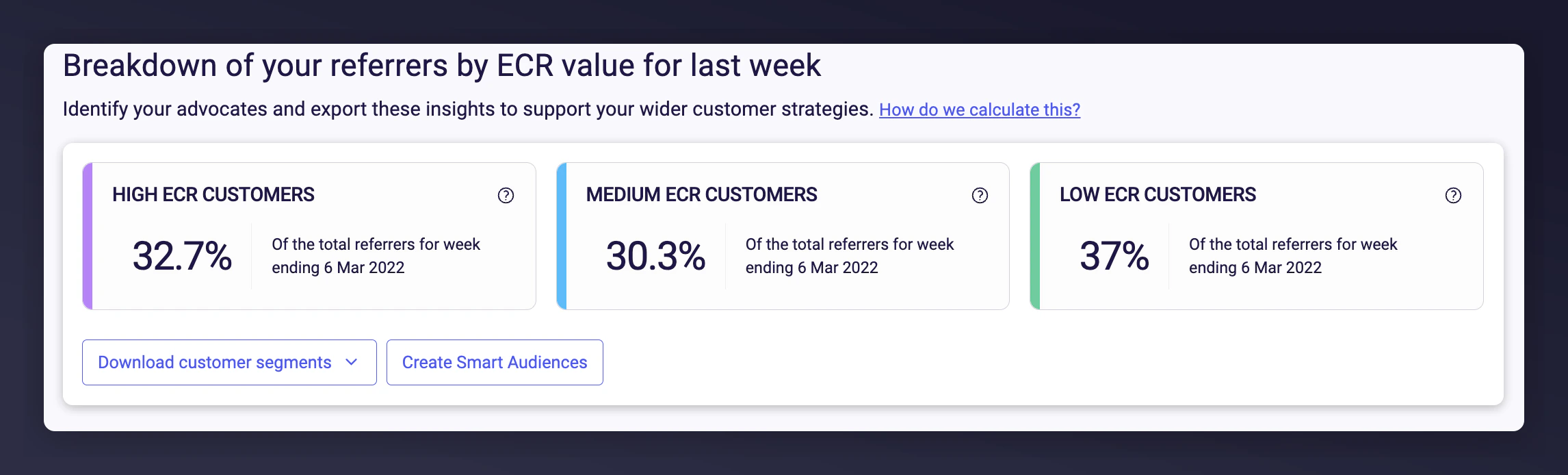
The Download customer segments dropdown.
Select segments and generate
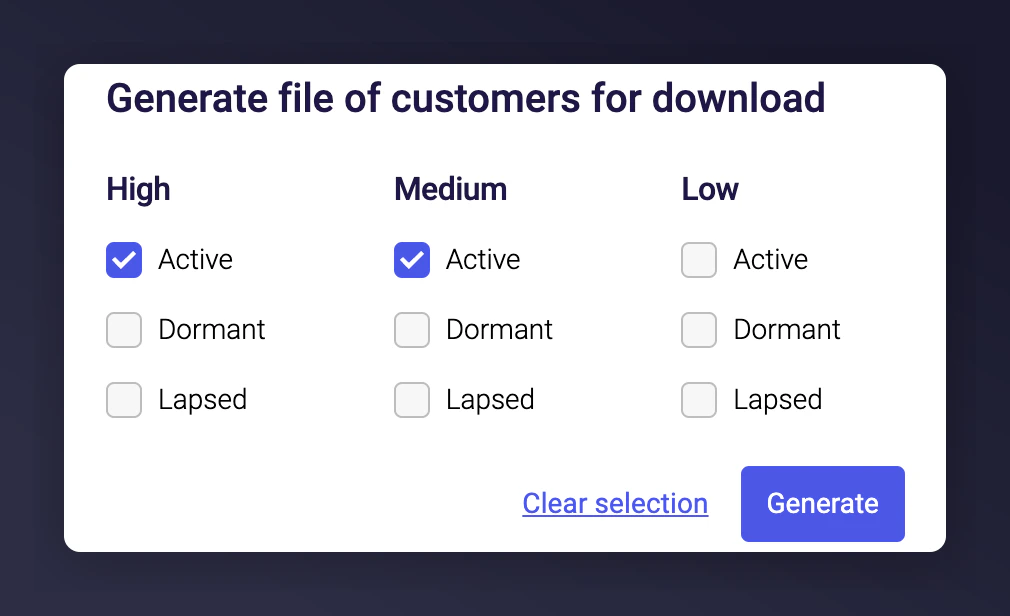
The segment selection screen with the Generate button.
Receive the CSV
Active, Dormant, and Lapsed Periods
The active/dormant/lapsed time periods are unique to your business, based on your customers’ purchase cycles. You can see the exact values in the “How we’ve defined Active, Dormant and Lapsed” table at the bottom of the page. For a customer to fall into active, dormant, or lapsed, they must make either a purchase or a referral within the specified time period. The periods are calculated using the cumulative sum of subsequent orders in relation to time since the previous order, as a proxy for the average probability of repeat purchases. The Dormant and Lapsed states are found at the intersection of the probability curves with specific statistical thresholds.Predicted ECR
- Which fans are likely to keep advocating
- Which fans are likely to stop advocating
- Who your future advocates are likely to be
How It Is Calculated
Historical patterns are used to predict customer lapsing, purchase, and referral behaviour in the next 12 months. This gives personalised propensities for each customer, enabling calculation of how the make-up of your base might change. The prediction takes into account recency, frequency, and value (RFV) for both orders and referrals.Viewing Predicted Advocacy Shift
Navigate to Advocacy Intelligence > Customer Revenue and scroll down past the current ECR breakdown.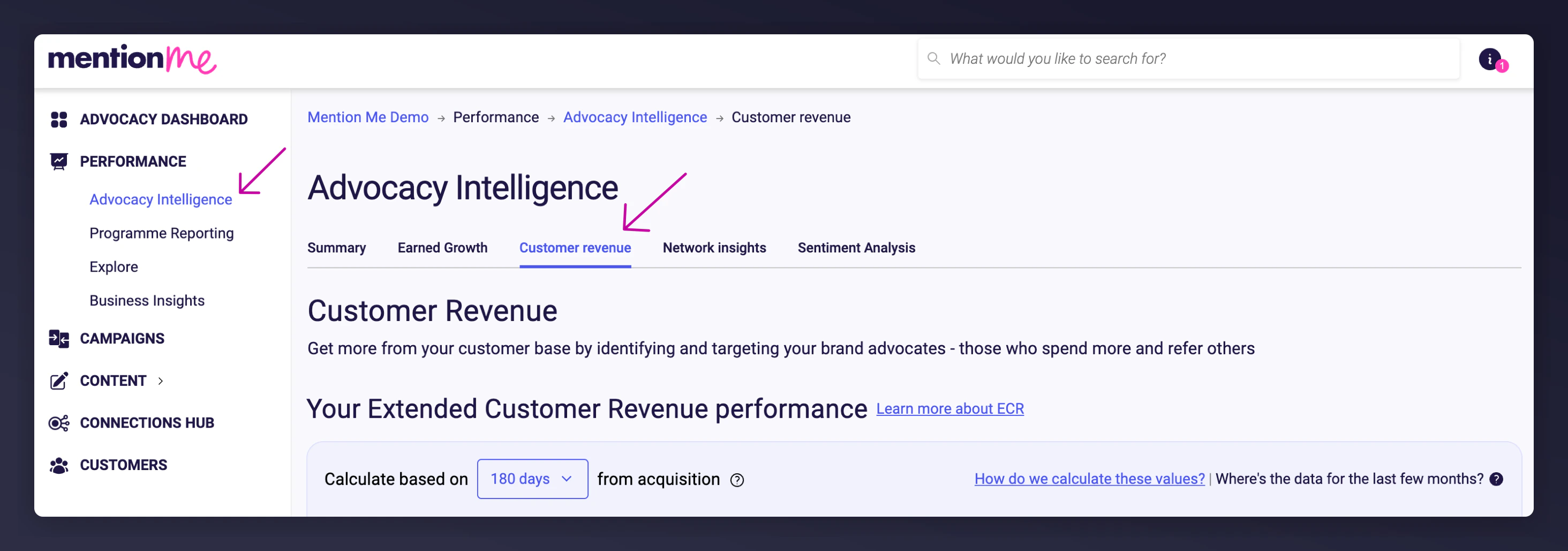
The Predicted Advocacy Shift section under Advocacy Intelligence, Customer Revenue.
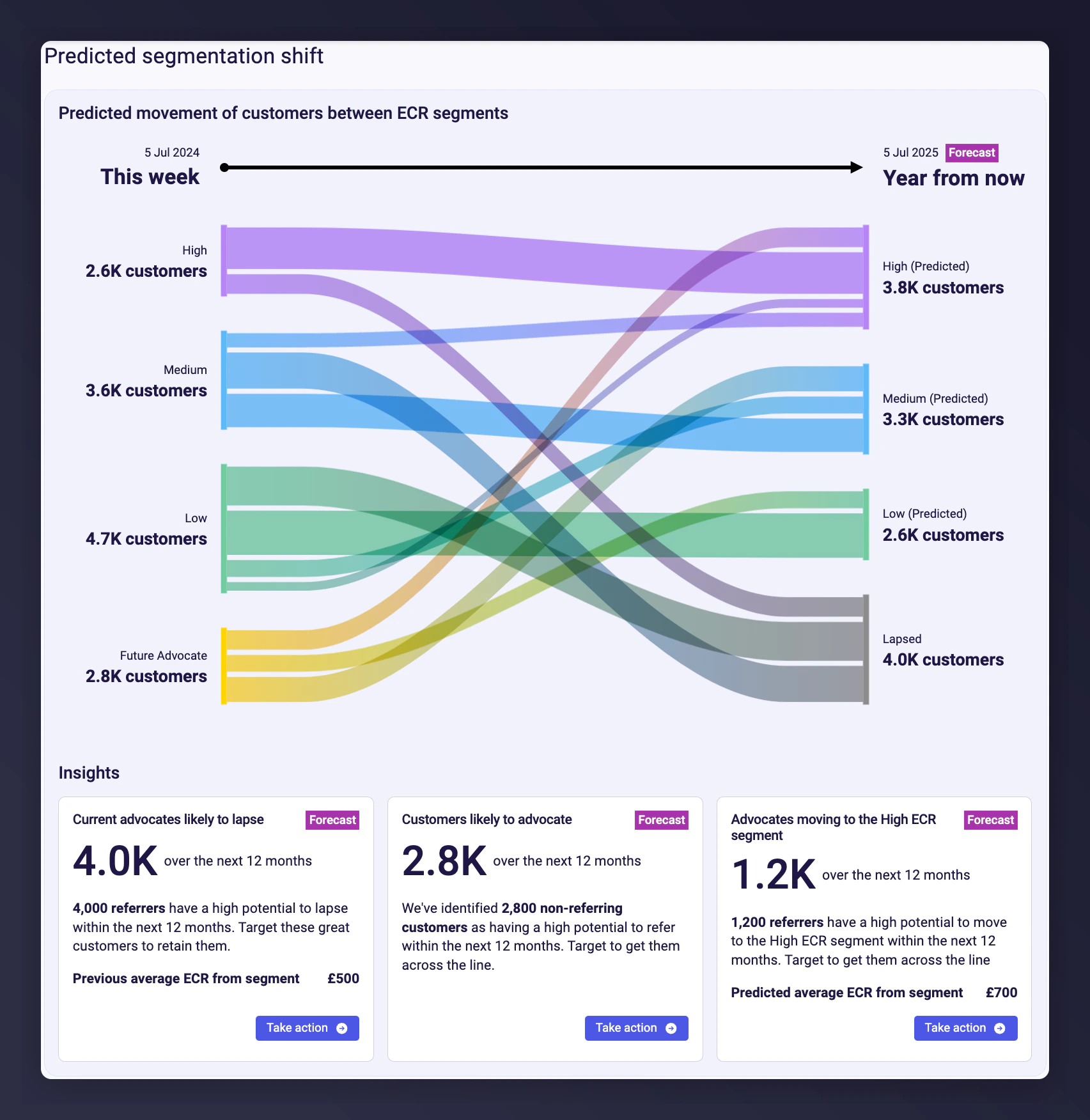
Sankey chart showing predicted customer movement between ECR segments over 12 months
Key Predicted Segments
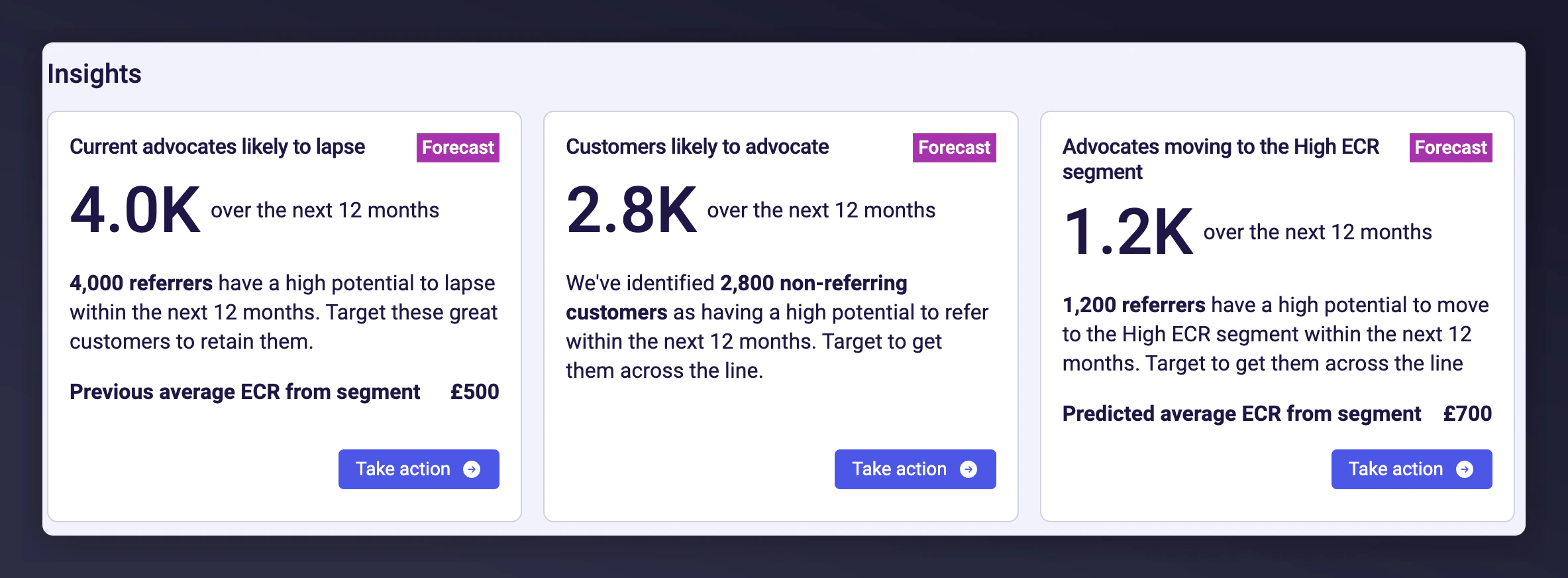
The key predicted segments: Future Advocates, Likely to Lapse, and Future High Advocates.
- Future Advocates: Most likely to advocate this year. Target with calls to action.
- Likely to Lapse: Predicted to stop purchasing or referring. Target with reactivation campaigns.
- Future High Advocates: Your most valuable advocates. Give them a great experience to maintain advocacy.
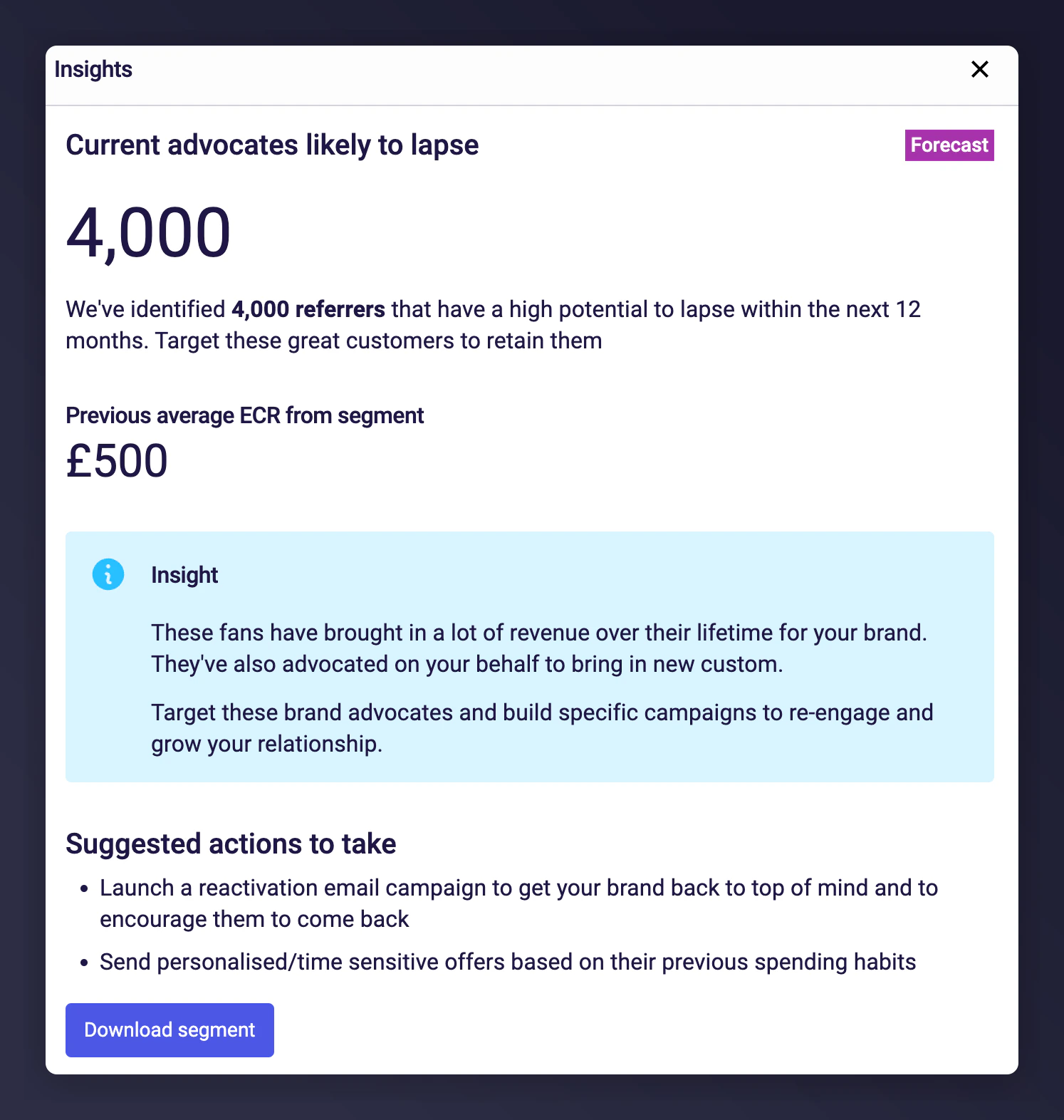
The Take Action button used to download customers in predicted segments.
Data Requirements for Predicted ECR
- At least 100k customers (distinct emails) in your data
- 3 years (no gaps) of order data
- 90 days of referral data
- Predictions for subscription businesses are not currently supported
Subscription Data for ECR
If your business model is subscription-based (or partly so), additional data is needed to get full value from ECR, Network Insights, and Earned Growth. The existing tag integration only captures the initial purchase or signup, meaning subsequent subscription revenue is not visible.What Is Needed
Send each renewal as a new order so that modelling can calculate the true value of a customer and their referrals.Next Steps
Upload historical orders
FAQ
What package is required?
- ECR charts are available on any package.
- Predicted ECR and segment downloads require Optimise, Advanced, or Ultimate.