

What is Earned Growth?
Earned Growth is a metric for measuring your business’s organic growth rate. It reflects how fast your business grows each year from retention and advocacy alone, excluding revenue from customers acquired through paid channels. A high Earned Growth rate signals sustainable growth and demonstrates how much your customers value your brand. Earned Growth was developed by Fred Reichheld, creator of Net Promoter Score, and Bain & Company. It was first published in Winning on Purpose (2021) and summarised in the Harvard Business Review as NPS 3.0.How Earned Growth Can Transform Your Business
By measuring and optimising for Earned Growth, you gain:- Sustainable organic growth - reduces reliance on paid marketing, creating a robust business model.
- Enhanced profitability - lower ad costs free up budget or boost profit.
- Competitive edge - advocates spend more, refer friends, and return more often, creating a virtuous cycle that transforms your economics.
How Your Earned Growth Score Is Calculated
Your Earned Growth score is the sum of growth from retained and referred customers. Revenue over the last 12 months is split into three origin sources:- From existing customers (Growth from Retained Revenue)
- From new customers acquired via advocacy (Growth from Earned Acquisition)
- From new customers acquired via paid marketing (Growth from Bought Acquisition)
- Growth from Retained Revenue = Revenue from existing customers (including reactivated) in the last 12 months / Revenue from all customers in the prior 12 months
- Growth from Earned Acquisition = Revenue from new customers in the last 12 months (estimated from survey) / Revenue from all customers in the prior 12 months
- Earned Growth = Growth from Retained Revenue + Growth from Earned Acquisition
The Earned Growth Dashboard
Requirements
To see your Earned Growth score, you need:- At least 2 years of continuous historical order data
- A running customer origin survey (shown to a small percentage of first-time customers) with at least 1,000 responses

Earned Growth dashboard under Advocacy Intelligence

A notification showing the missing data requirements for Earned Growth.

The Earned Growth dashboard shown with dummy data visuals.
What the Dashboard Can Do
- Track your organic growth rate (Earned Growth score)
- Identify opportunities to improve your score
- Monitor the impact of any changes you make
Earned Growth Revenue Projection

Revenue Projection calculator showing five-year gross profit scenarios
- Revenue from bought new customers stays constant (no paid marketing growth)
- Earned customers are 50% more likely to refer, spend 20% more, and are 20% more likely to be retained than bought customers
- The same proportion of existing customers is earned each year
- Margin of 20% for bought customer revenue
Estimating Time Until Earned Growth Is Calculated
When setting up a customer origin survey, you need to balance populating your dashboard quickly against the impact on your referral scheme. The higher the percentage of first-time customers who see the survey, the quicker you get results, but the bigger the monthly impact on referrals. Customers who see a survey before seeing a referral offer are slightly less likely to refer (about 80% of your typical conversion rate). The platform uses past data to predict:- How many customers you can expect per month
- How many are first-time customers
- How many will see the survey (based on the percentage split selected during setup)
- How likely they are to answer (based on data from other merchants)
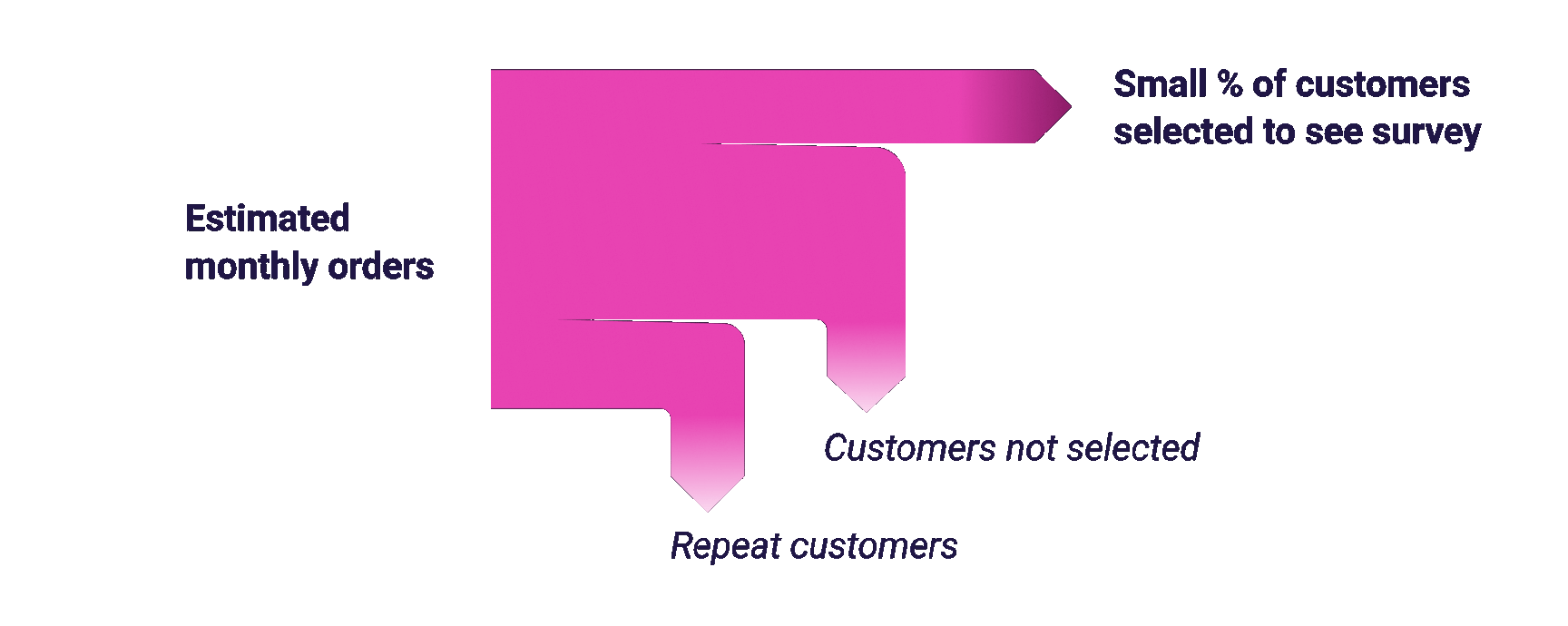
A time-to-results prediction based on monthly customer survey volume.
FAQs
How do you recommend engaging senior stakeholders with Earned Growth?
Share Earned Growth insights in regular reports and meetings. Highlight rate changes and take snapshots of dashboard graphs. Earned Growth helps to show the value of advocacy.How do you tell which customers come from bought channels vs earned channels?
Set up a customer origin survey shown post-purchase to a sample of first-time customers. The survey asks how they discovered your brand, with options indicating “earned” (recommendations, reviews, reputation, previous use) or “bought” (ads, search engines). “Other” responses are classified individually.
A customer origin survey asking how the customer discovered the brand.